FRM-KT1 Formaldehyde Gas Dosimeter
The ChemSee FRM-KT1 formaldehyde dosimeter is a small, lightweight colorimetric badge for monitoring cumulative exposure to formaldehyde gas. The badge can be worn using its clip for personal monitoring or positioned in a room or other area where formaldehyde exposure is a concern.
Visual Readings
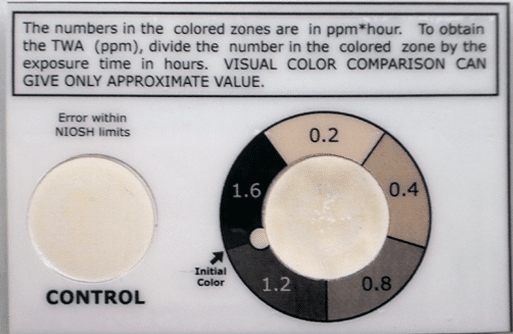
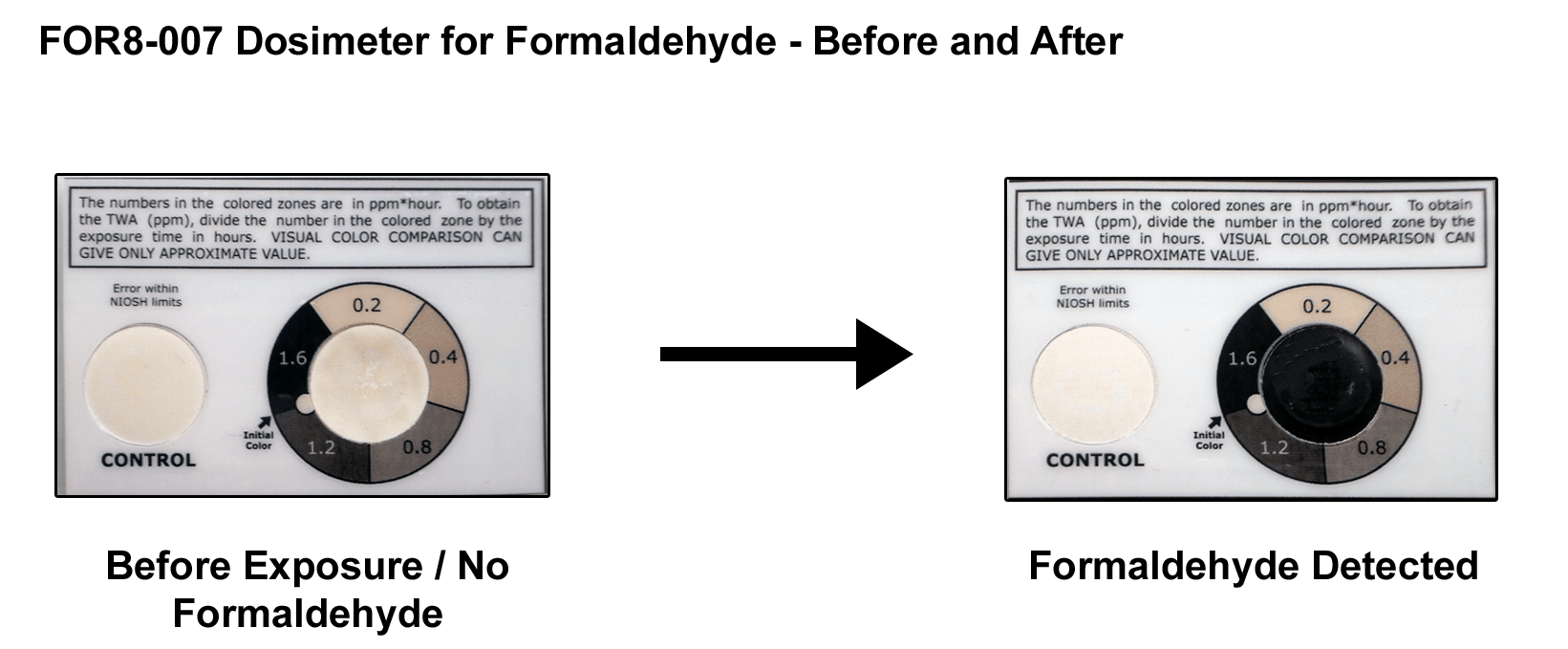
The dosimeter develops a visible color response as it is exposed to formaldehyde. The resulting color is compared with the supplied reference scale for a semi-quantitative exposure reading.
Flexible Placement
Attach the dosimeter to a person using the supplied clip or place it in a room, work area or other location where formaldehyde gas is being monitored.
Free Return Analysis
After exposure, FRM-KT1 dosimeters may be returned to ChemSee for quantitative reading of the exposed indicator at no additional analysis charge.
Choose Your FRM-KT1 Package
Select a package of 2, 5 or 10 formaldehyde dosimeters. Each package includes the materials needed for visual monitoring and instructions for optional return analysis.
FRM-KT1 – Formaldehyde Dosimeters & In-Lab Sample Analysis
Price range: $45.00 through $195.00
How the FRM-KT1 Works
Expose the dosimeter to the surrounding air, observe the resulting color and use the supplied reference scale to estimate cumulative formaldehyde exposure.
Expose
Position the dosimeter with the back side exposed to the surrounding air. Typical monitoring periods are approximately 24–72 hours.
Compare
After the monitoring period, compare the color developed on the front of the dosimeter with the supplied printed color reference.
Interpret
The visual comparison provides a semi-quantitative estimate of cumulative formaldehyde exposure over the monitoring period.
Detection range: The FRM-KT1 visual scale covers cumulative formaldehyde exposure from approximately 0 to 1 ppm·hr.
Understanding the Exposure Reading
Reading the Dosimeter
The FRM-KT1 measures cumulative exposure in ppm·hr. Compare the developed color with the reference scale supplied with the dosimeter to estimate the total exposure accumulated during the monitoring period.
Exposure Over Time
To estimate the average formaldehyde concentration during the monitoring period, divide the cumulative ppm·hr reading by the total number of hours the dosimeter was exposed.
Example: A cumulative reading of 0.8 ppm·hr over 8 hours corresponds to an estimated average concentration of 0.10 ppm during that period.
Important: FRM-KT1 provides colorimetric exposure screening. Workplace exposure assessment and regulatory compliance should be evaluated according to the applicable occupational-safety requirements and monitoring procedures.
Free Quantitative Return Analysis
After completing your monitoring period, you may return the exposed dosimeters to ChemSee for quantitative reading.
Prepare the Dosimeter for Return
- Seal the exposed dosimeter after testing is complete.
- Remove as much air as practical from the storage bag before sealing.
- Include the completed log sheet.
- Include your name, email address and phone number.
Send to ChemSee
ChemSee / Appealing Products, Inc.
Attn: Sample Analysis
1818 Saint Albans Dr., Suite 102
Raleigh, NC 27609
USA
Quantitative readings are returned electronically using the contact information supplied with the dosimeter.
FRM-KT1 Package Contents & Features
Package Contents
- 2, 5 or 10 FRM-KT1 Formaldehyde Dosimeters
- Color reference and instructions
- Monitoring log sheet
- Instructions for optional in-lab analysis
Detector Features
- Semi-quantitative visual colorimetric analysis
- Approximately 0–1 ppm·hr cumulative detection range
- Small, lightweight badge format
- Suitable for personal or area monitoring
- No electronic reader required for visual interpretation
- Optional quantitative return analysis available
Formaldehyde Exposure Information
About Formaldehyde
Formaldehyde (CH₂O) is a colorless gas with a strong, irritating odor. It is used in and released from a variety of industrial, laboratory and building materials.
The U.S. National Toxicology Program classifies formaldehyde as known to be a human carcinogen.
Occupational Exposure Limits
For U.S. workplaces covered by OSHA’s formaldehyde standard, the permissible exposure limit is 0.75 ppm as an 8-hour time-weighted average. OSHA also specifies a 2 ppm 15-minute short-term exposure limit.
Appropriate workplace monitoring and compliance decisions should follow the applicable OSHA requirements and occupational-hygiene procedures.
Questions About Formaldehyde Monitoring?
Contact ChemSee if you have questions about selecting a dosimeter package, monitoring duration, visual interpretation or returning exposed dosimeters for analysis.