KT-06 API Food Poison Detection Kit
The KT-06 API Food Poison Detection Kit is a portable, self-contained screening kit for rapidly detecting a broad range of dangerous chemical poisons in food, beverages and other prepared samples.
Presumptive colorimetric screening across nine target categories and three detector groups. The nine target categories are cyanides, azides, sulfides, chromates, lead, mercury, cadmium, thallium and arsenic-containing compounds.
Results are interpreted from the visible color response using the supplied reference materials. The kit is intended for screening rather than quantitative laboratory measurement or chemical speciation.
Three Detector Groups
Presumptive screening for the listed anion, heavy-metal and arsenic-containing poison classes.
Visual Color Response
Interpret the prescribed visible response using the current instructions and supplied reference materials.
Broad Screening
Separate detector groups screen anions, heavy metals and arsenic compounds.
Self-Contained
Includes the materials needed for sample preparation, testing and interpretation.
What Does the KT-06 Detect?
The KT-06 combines three complementary detector groups to provide broad screening for some of the most significant inorganic chemical poisons that may be introduced into food or beverages.
Anion Poisons
- Cyanides
- Azides
- Sulfides
- Chromates
Screened using the Group I colorimetric detector.
Heavy Metal Poisons
- Lead
- Mercury
- Cadmium
- Thallium
Screened using the Group II heavy-metal detector.
Arsenic Compounds
A separate detector provides screening for arsenic-containing compounds in the prepared sample.
Together, the three detector groups provide broad presumptive screening across the listed poison classes.
How the KT-06 Works
The kit is designed to move from sample preparation to visual screening without requiring laboratory instrumentation.
Prepare the Sample
- Prepare a representative food, beverage or other compatible sample.
- Use the sample-preparation materials included with the kit.
- Follow the supplied instructions for the sample type being screened.
Run the Detectors
- Apply the prepared sample to the appropriate detector groups.
- Built-in quality-assurance features help verify proper detector operation.
- No electronic reader is required.
Interpret the Results
- Observe the resulting colorimetric responses.
- Compare results with the supplied full-color reference materials.
- Handle positive or uncertain screens under the user’s response and confirmatory-testing procedure.
Developed for Real-World Food Security
The KT-06 was developed for situations where food and beverages may need to be screened rapidly before service or consumption in security-sensitive environments.
Officials & Dignitaries
Food-security screening for protected government officials, visiting delegations and dignitaries.
Field & Facility Use
Portable screening for military facilities, deployed operations and controlled environments.
VIP Food Security
Screening support for executives, protected individuals and executive-protection programs.
Secure Food Service
Rapid screening for hotels, venues and food-service operations supporting high-profile guests.
Development and Independent Evaluation
ChemSee’s food-poison detection technology was developed under contract with the U.S. Department of Defense through the Technical Support Working Group for deployable food-security screening.
Independent DoD Validation
The technology developed through the TSWG program was independently evaluated for detecting toxic chemicals and metallic poisons across a range of tested food matrices.
Independent Technical Evaluation
An independent technical evaluation by NC State’s food-science program reported rapid identification of dangerous poison levels under the evaluated conditions and straightforward detector operation.
KT-06 Kit Contents & Screening Method
Everything Needed for Field Screening
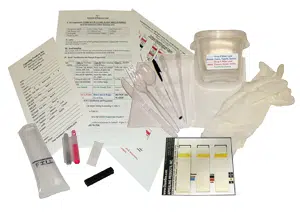
- CA-61 Group I detection card
- HM-34 Group II heavy-metal detection card
- AJ-05 Group III arsenic detection pouch
- Sample-preparation materials
- Mixing and transfer materials
- Full-color instructions and reference materials
- Results documentation materials
Portable Colorimetric Detection
| Screening detail | KT-06 |
|---|---|
| Result type | presumptive colorimetric screening |
| Interpretation | Visible color intensity compared with supplied reference materials |
| Electronic reader | Not required |
Screening method: The KT-06 provides presumptive colorimetric screening for the listed poison groups. Results are interpreted according to the prescribed visible response in the current instructions and supplied reference materials; the kit is not a quantitative laboratory instrument and does not provide chemical speciation.
Training & Technical Resources
ChemSee provides instructional resources for organizations implementing the KT-06 in a food-security program or refreshing personnel before testing.
Video Instruction
Step-by-step videos cover introduction, sample preparation, detector operation and result interpretation.
Technical Review
Confirm the current detector scope, sample requirements and available documentation for the intended application.
KT-06 Datasheet
Review the current product document for detector groups, kit contents and operating information. Confirm the revision before use.
Commercial, Government & International Purchasing
KT-06 commercial pricing is provided by quotation so ChemSee can account for organization type, order quantity, destination, distributor requirements and project-specific purchasing needs.
Government agencies, military organizations, security programs, institutions and international distributors are welcome to contact ChemSee for pricing and procurement information.
Understanding a Negative Screen
A negative screen means that no applicable response was observed under the conditions of the test. It does not rule out chemicals outside KT-06 coverage, amounts that do not produce the prescribed response, matrix interference or sampling error. A credible threat, suspected exposure, unusual symptoms, or an uncertain or inconsistent result should still trigger the organization’s hold, isolation, notification, emergency-response and confirmatory-testing procedures.
KT-06 does not quantify concentration, identify the exact chemical species or establish that a sample is safe.